
Smoke Detector Maintenance and Safety: A Simple Guide to Protecting Your Home
A working smoke detector is one of the cheapest and most effective safety devices you can own. According to the National Fire Protection Association, most home fire deaths happen in homes with no smoke alarms or with alarms that didn’t work. Most failures come down to dead batteries, old units, or alarms that were never installed in the right places.
The good news is that keeping your detectors in shape takes only a few minutes a month.
Where to Put Smoke Detectors
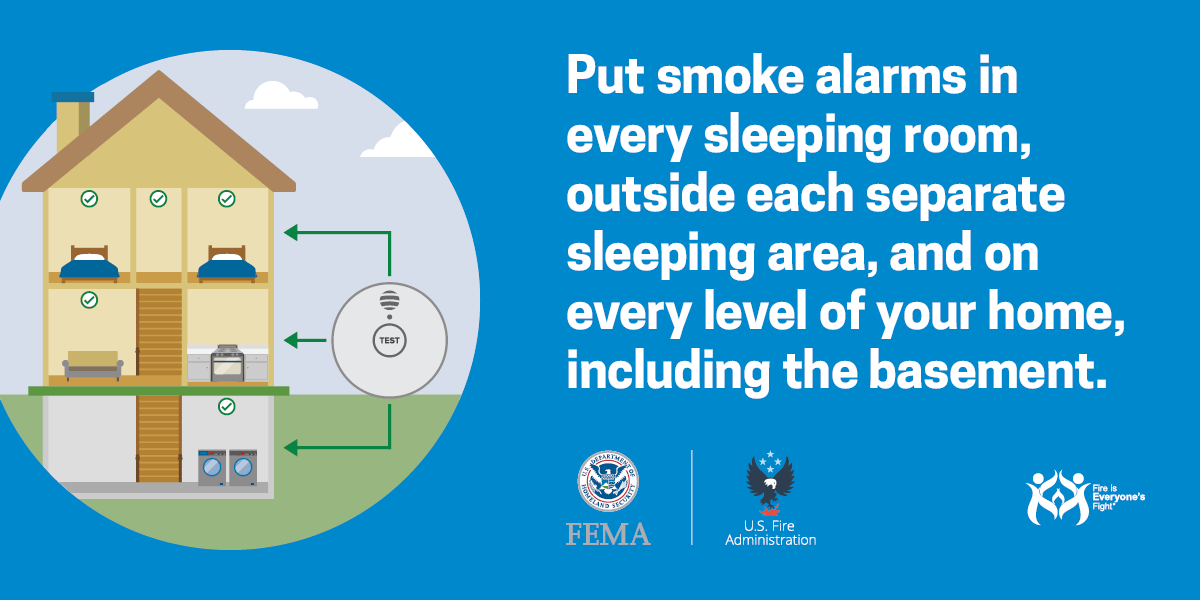
Placement matters as much as maintenance. The standard guidance is:
- Every level of your home, including the basement and attic if it’s finished
- Inside every bedroom
- Outside each sleeping area, such as in the hallway near bedrooms
- On the ceiling or high on a wall, since smoke rises. On a wall, mount it 4 to 12 inches below the ceiling
- Away from kitchens and bathrooms where possible. Cooking fumes and shower steam cause false alarms, and people who get tired of them tend to disable the unit. If you must place one nearby, put it at least 10 feet from the stove
If your detectors aren’t interconnected, consider upgrading to units that are. When one sounds, they all sound, which gives you more warning if a fire starts far from where you are.
Your Monthly, Yearly, and Decade Checklist
Every month: Press and hold the test button until the alarm sounds. If it’s weak or silent, replace the batteries right away, or replace the unit if new batteries don’t fix it.
Every six months to a year: Vacuum the vents and exterior with a soft brush attachment. Dust, cobwebs, and insects can trigger false alarms or, worse, block smoke from reaching the sensor.
Every year: Replace the batteries in any unit with standard (non-sealed) batteries. A popular habit is to do it when the clocks change in spring and fall. Skip this step for units with sealed 10-year lithium batteries but keep testing them monthly.
Every 10 years: Replace the whole detector, no matter how well it seems to work. The sensors degrade over time. Look for the manufacture date printed on the back of the unit. If there’s no date, or it’s older than a decade, it’s time for a new one.

Types of Smoke Detectors
There are two main sensor types:
- Ionization alarms tend to respond faster to fast-flaming fires.
- Photoelectric alarms tend to respond faster to slow, smoldering fires, and they’re less prone to nuisance alarms from cooking.
Since you can’t predict what kind of fire you’ll have, many safety experts recommend dual-sensor alarms or a mix of both types in the home.
What to Do When Your Detector Chirps
A single chirp every 30 to 60 seconds is almost always a low-battery warning, and it has a knack for starting at 3 a.m. Don’t ignore it or pull the battery and leave it out. Replace the battery immediately. If the chirping continues with a fresh battery, the unit is probably at the end of its life.
For false alarms from cooking, fan the air near the detector or use the hush feature if it has one. Don’t take down the alarm.
Don’t Forget Carbon Monoxide
Smoke detectors don’t detect carbon monoxide (CO), an odorless gas that can be deadly. Install CO alarms outside sleeping areas and on every level, or use combination smoke/CO units. CO alarms have their own replacement schedules, often 5 to 7 years, so check the label.

Make a Plan, Not Just a Purchase
Detectors give you warning, but you still must act on it. Take a few minutes with your household to:
- Map out two ways out of every room
- Pick a meeting spot outside, such as the mailbox or a neighbor’s tree
- Practice the plan at least twice a year, including at night
- Teach kids what the alarm sounds like and that the rule is to get out and stay out
The Bottom Line
Test monthly, change batteries yearly, replace units every decade, and make sure you have coverage on every level and in every bedroom. It’s a small routine that could save your family’s lives.
Check yours today. If you can’t remember the last time you pressed the test button, that’s your sign.












Be the first to comment